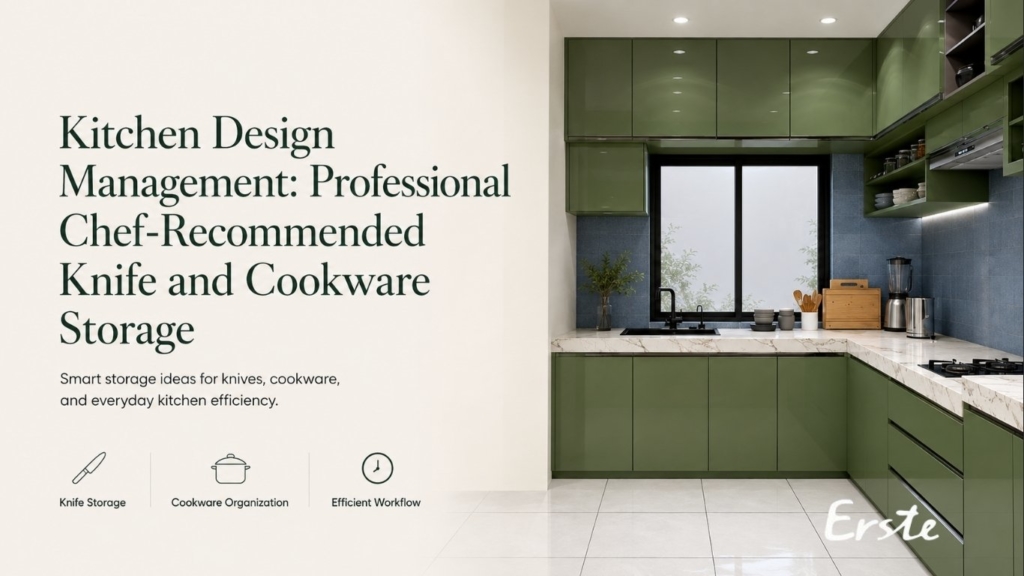
Kitchen design that prioritises professional-grade storage transforms daily cooking from a frustrating search for tools into a seamless, efficient workflow. Professional chefs understand that every second counts during meal preparation, and the same principle applies to home cooking. A well-planned kitchen design places knives, cookware, and utensils exactly where they are needed most, eliminating wasted movement and reducing the physical strain of repeated bending and reaching. This guide draws on chef-endorsed storage strategies to help you reorganise your kitchen design for maximum efficiency, safety, and longevity of your culinary tools. From custom knife drawers to smart pot storage systems, these professional insights will help any home cook work faster and enjoy the process more.
Knife Storage: Where Professional Kitchen Design Begins
Knife storage is arguably the most overlooked element in residential kitchen design, yet it directly affects safety, blade longevity, and cooking speed. Professional chefs unanimously agree that a good knife setup is not just about aesthetics—it is a workflow decision. Knife placement affects prep speed, safety, and even your cooking mood.
In-Drawer Knife Blocks: The Professional‘s First Choice
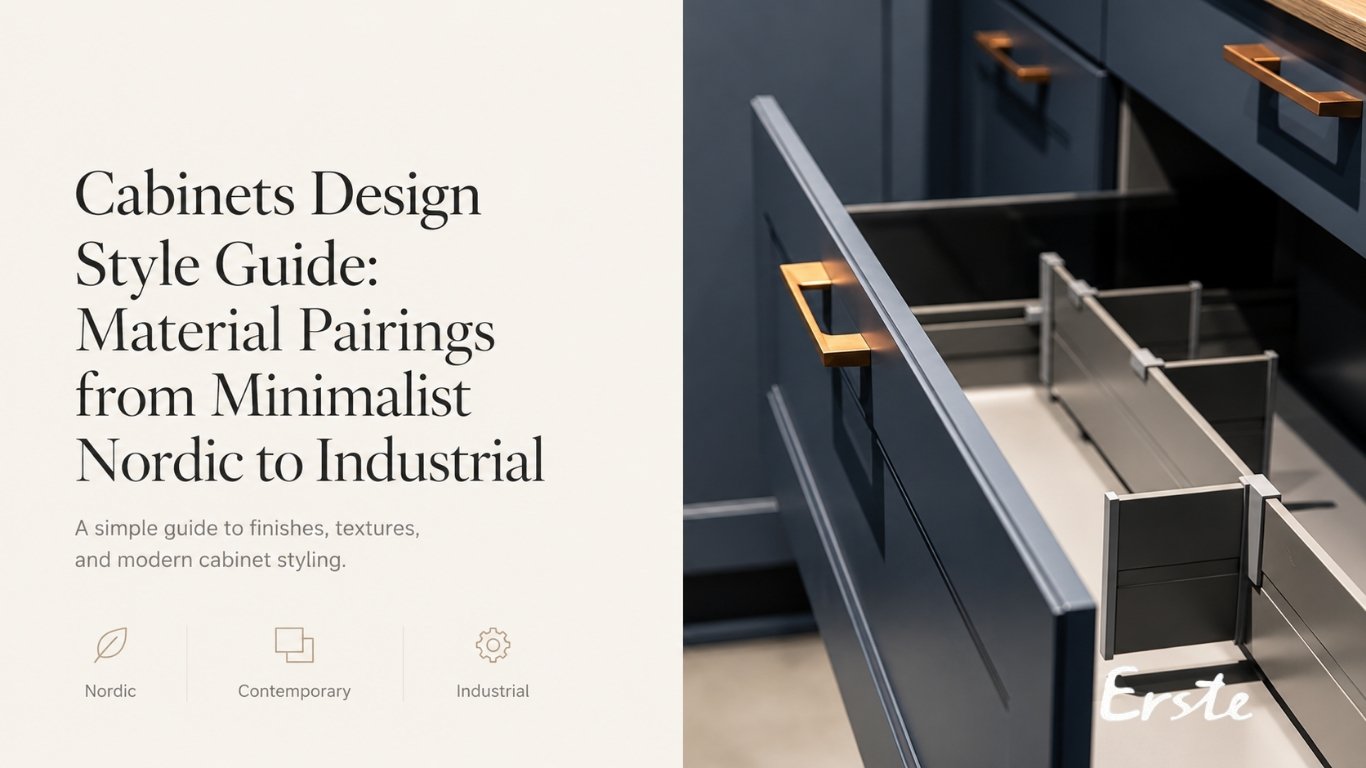
The most chef-recommended storage method is the in-drawer knife block. Unlike countertop blocks that consume valuable workspace or magnetic strips that expose blades, in-drawer systems protect both the user and the knives. Professional recipe developers frequently prioritise drawers over any other storage method, placing a dedicated knife drawer within arm’s reach of the cutting board.
- Drawer inserts with fitted slots or magnetic inlays protect blades from dulling by preventing them from knocking against each other.
- Many in-drawer systems offer 15–19 slots, accommodating an entire knife collection while keeping counters completely clear.
- Lockable knife drawers provide an extra layer of safety in households with children, something a magnetic strip cannot offer.
- For older home kitchens where wall mounting is impractical, in-drawer knife storage eliminates the need for drilling and landlord approvals.
A well-designed kitchen design incorporates knife storage that is both accessible and concealed. One chef recalled retrofitting a narrow 12-inch drawer with a custom bamboo insert that held six favourite knives—nobody knew it was there, and the counter looked serenely empty. Custom knife drawers can include angled arrangements that let you see the blade profile before you pick it up, along with integrated sharpening stations right next to the knives themselves.
Magnetic Strips: When Drawers Are Not an Option
Magnetic knife strips offer an alternative for kitchen design scenarios where drawer space is insufficient. When mounted correctly, a magnetic strip saves counter and drawer space while keeping blades visible and accessible.
- Place the strip 2–4 inches above your primary board height for ergonomic reach, and angle it slightly if cabinets allow.
- A magnetic strip is more sanitary than a traditional knife block because it has fewer crevices where moisture and bacteria accumulate.
- Choose a strip with a wood face or soft backing to protect blade finishes—cheap strips can scratch softer steels over time.
- Never mount a magnetic strip directly above a sink or range, as steam, grease, and splatter can coat blades and promote rust.
For families with young children, some kitchen design professionals add a shallow ledge or magnetic guard to limit lateral knocks. However, the in-drawer knife block remains the superior choice for child-safe storage because blades are completely concealed.
Cookware Storage Systems: Organising Pots and Pans
The most common failure in residential kitchen design is inadequate cookware storage. Standard base cabinets with fixed shelves create stacking problems: pots get piled on top of each other, lids fall behind, and heavy Dutch ovens become awkward to lift from deep, dark cavities. Professional chefs design their kitchen design storage around three core principles: accessibility, visibility, and separation of lids from pots.
Deep Drawers: Replacing Base Cabinets
The single most effective upgrade in any kitchen design is replacing traditional base cabinets with deep, full-extension drawers. Deep drawers allow pots and pans to sit side‑by‑side rather than stacked, meaning every item is visible and accessible without crouching or digging.
- Standard base cabinets are simply large empty boxes that work fine for dishes but not for bulky cookware with handles and lids. When designers replace shelves with drawer systems, homeowners report that their kitchen feels like it doubled in storage space, even though the cabinet footprint stayed the same.
- A three-drawer configuration works best for most kitchen design layouts: a shallow top drawer for lids, a medium drawer for saucepans and small pans, and a deep bottom drawer for stockpots and large cookware.
- Full-extension drawer runners rated for 35–45 kilograms handle cast iron cookware reliably, and soft‑close mechanisms reduce banging and wear.
- Drawer width between 30–36 inches provides ample room for most pot and pan collections.
One kitchen designer noted that in a micro-loft project, swapping a standard base cabinet for a 2-tier pull-out system cut cookware searching time in half. Clients reported that everything was at eye level—well, knee level—but within one smooth reach.
Vertical Lid Organisation: Ending the Chaos
Lid storage is where many kitchen design plans fall apart. Stacking lids horizontally wastes space and creates frustrating avalanches when you need the one at the bottom. The professional solution is vertical organisation.
- Store lids in a long, low-profile drawer directly above the drawer holding pots and pans. This simple split keeps the two components of cookware together but separated, eliminating the need to dig through stacked lids.
- Alternatively, use vertical lid dividers that hold lids upright like files in a cabinet. Adjustable tension rods can be mounted vertically inside cabinet doors, creating perfect slots for storing pot and pan lids while utilising otherwise wasted door space.
- Pull‑out pan dividers and cabinet lid racks are effective vertical solutions recommended by kitchen organisers.
- If vertical space is constrained, nest lids vertically inside a single deep drawer using a specialised lid organizer rack.
The key insight from professional kitchen design is simple: separating lids from pots increases cabinet capacity and prevents unstable stacking. One designer emphasised that the biggest mistake they see is storing lids on top of pots, which makes grabbing the correct lid a time‑consuming puzzle every single time.
Pull-Out Systems and Roll-Out Trays
For kitchens where full drawer replacement is not feasible, pull-out systems offer a compelling alternative within existing kitchen design cabinetry.
- Roll-out trays convert standard base cabinets into accessible storage. Instead of digging to the back of a deep cabinet, you pull the whole tray forward and see everything at once.
- Pull-out systems turn deep, dark cabinets into one‑glide stages for your pots and Dutch ovens. Two‑tier pull-outs double the effective storage of a single cabinet.
- Narrow pull‑out cookware cabinets, often just 15–20 cm wide, can be installed between appliances or in otherwise wasted spaces, providing vertical storage for baking sheets, cutting boards, and tray dividers.
Zone Mapping: Grouping Tools by Task
Professional chefs organise their kitchens using a principle called zone mapping. Instead of storing items wherever they happen to fit, zone mapping groups tools and ingredients by the task they support. This approach is the cornerstone of efficient kitchen design and is widely used by professional kitchen designers for both residential and commercial spaces.
Prep Zone
The prep zone is where food is washed, cut, measured, and mixed before cooking. In effective kitchen design, this area should be located near the refrigerator and the primary sink, with ample countertop space for working.
- Storage in the prep zone includes cutting boards, knives, peelers, mixing bowls, measuring cups, and frequently used seasonings.
- The most accessible drawer in this zone—often the top drawer of a column of drawers—should hold your chef‘s knife, paring knife, and bread knife.
- By keeping knives within arm’s reach of the cutting board, you eliminate the need to walk across the kitchen every time you need to slice an ingredient.
- Many professional cooks also keep kitchen shears and a honing steel in this same prep zone.
Cooking Zone
The cooking zone is centred around the stove or cooktop. This is where the majority of heat-based preparation occurs. Proper kitchen design ensures that everything needed for stovetop cooking is stored within this zone.
- The cooking zone should include pots, pans, lids, cooking utensils such as spatulas and ladles, oils, and spices used for seasoning during cooking.
- When designing your kitchen design layout, place pot storage directly beneath or immediately adjacent to the cooktop. Every extra step you take to retrieve a pan adds unnecessary time to meal preparation.
- Utensils used first at the stove should be stored in the cabinet or drawer between the sink and stove, even if this requires duplication of some items.
- For right‑handed cooks, professional chefs recommend keeping all cooking tools on the right side of the stove. For left‑handed cooks, position tools on the left. This small adjustment in kitchen design dramatically improves ergonomics and speed during active cooking.
Cleaning Zone
The cleaning zone is centred around the sink and dishwasher. This area stores dish soap, sponges, scrub brushes, towels, and waste bins. In thoughtful kitchen design, the cleaning zone should be isolated from food preparation zones to prevent cross‑contamination of cleaning chemicals with ingredients.
Work Triangle Integration
The work triangle—the relationship between the sink, refrigerator, and cooktop—remains a valid principle in kitchen design, but professional chefs now advocate for zone‑based thinking that expands beyond the triangle. Each leg of the work triangle should measure between 4 and 9 feet (120–270 cm). When the triangle is too tight, cooks feel cramped. When it is too spread out, efficiency drops.
- Position the knife drawer within the prep zone, which should be located between the refrigerator and the cooking zone.
- Place pot drawers directly beneath or immediately adjacent to the cooktop.
- Store cooking utensils in the space between the sink and the stove, following the natural flow of cleaning produce at the sink, chopping at the prep counter, and cooking at the stove.
- For households where two people cook simultaneously, widen aisle clearances to at least 42–48 inches to allow comfortable passing without shoulder contact.
Practical Implementation Steps
To improve your kitchen design using professional storage strategies, follow this step‑by‑step process:
- Step 1: Audit your current setup. Empty your cabinets and sort items into categories: knives, pots and pans, lids, cooking utensils, and prep tools. Count how many of each you actually use regularly versus those that sit unused for months.
- Step 2: Map your work zones. Identify where you currently perform each cooking task. If you chop at the island, that is your prep zone. If you stir‑fry at the left side of the stove, that is your cooking zone. Then assign storage categories to each zone.
- Step 3: Prioritise drawer conversion. Replace deep, dark base cabinets with full‑extension drawer systems wherever budget allows. If a full replacement is not possible, retrofit existing base cabinets with roll‑out trays or pull‑out shelves.
- Step 4: Address knife storage first. Install an in‑drawer knife block within your prep zone. If drawers are unavailable, mount a high‑quality magnetic strip at the correct height and location.
- Step 5: Separate lids from pots. Dedicate a shallow drawer or a vertical rack system specifically for lid storage. Never stack lids on top of pots again.
- Step 6: Test and adjust. After reorganising, cook a few meals and note any friction points. Move items that feel out of place. The best kitchen design evolves with your habits.
erste has transformed countless kitchens by applying these professional storage principles. Browse our portfolio to see real examples of efficient kitchen design: https://www.erste.com.hk/our-work/
Ready to optimise your kitchen design with chef‑recommended storage systems? Contact unsere team for a consultation: https://www.erste.com.hk/contact/