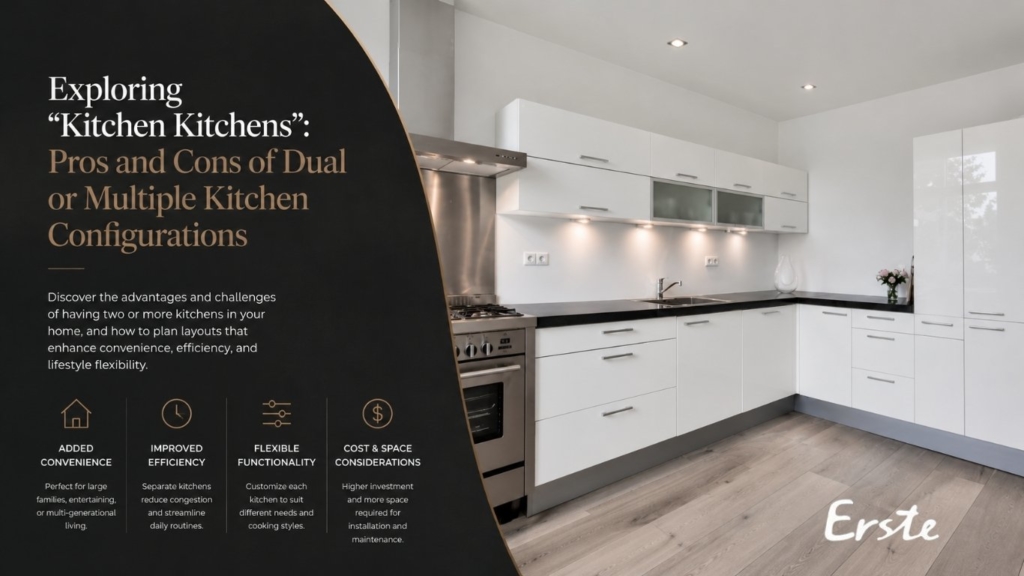
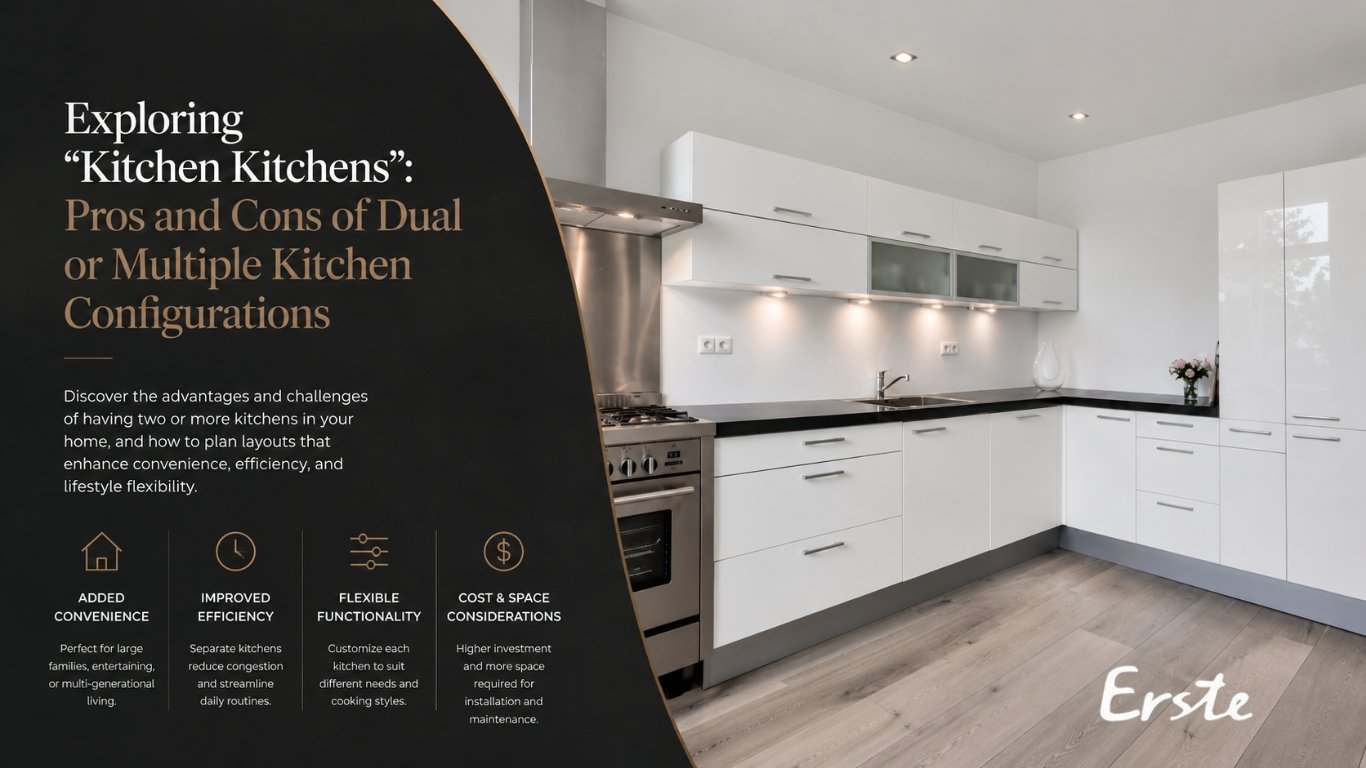
The concept of “Kitchen Kitchens”—having two or more distinct kitchen spaces within the same home—has gained remarkable traction in recent years. But this trend is often misunderstood. Kitchen kitchens are not about separating cuisines such as Chinese cooking here and Western cooking there. Instead, they are about functional separation: a dedicated space for heavy, high-heat cooking alongside an open, guest-facing area for light preparation and social interaction . This dual approach resolves many frustrations that come with traditional open-plan kitchens.
Why Consider Kitchen Kitchens? Solving the Open-Plan Dilemma
Open kitchens look stunning on a quiet Sunday morning. They struggle on a Friday night when spices hit hot oil. The fundamental problem is that open kitchens are built for display, but real cooking is often intense, aromatic, and messy. Kitchen kitchens solve this by dividing roles clearly .
- The main kitchen stays clean, aesthetic, and guest-facing. It is ideal for light cooking, plating, social interaction, and everyday meals that do not generate heavy smoke or odours.
- The secondary kitchen, often called a spice kitchen, is enclosed, functional, and resilient. It is built to handle frying, boiling, grinding, and batch cooking—the kinds of cooking that fill a home with lingering aromas .
- The core insight is that kitchen kitchens restore balance. You no longer have to choose between a beautiful home and a practical one.
This model of kitchen kitchens is not about following trends—it is about solving real pain points. For households that cook aromatic dishes regularly, the dual-kitchen configuration can be genuinely transformative.
Pros of Kitchen Kitchens: What You Gain
When designed thoughtfully, kitchen kitchens offer several significant advantages over single-kitchen layouts.
- Superior odour and smoke control is the primary benefit. The enclosed spice kitchen contains heat, smoke, and strong aromas, preventing them from settling on living room furniture, curtains, and upholstery. A dedicated ventilation system—including a high-CFM range hood—extracts smoke before it can spread .
- Improved social flow is another major advantage. While the spice kitchen handles the heavy lifting, the main kitchen remains open to living and dining areas. A toughened glass sliding partition between the two spaces blocks smoke and noise but allows light to flow through .
- Enhanced appliance storage comes naturally with kitchen kitchens. Modern kitchens accumulate more appliances than ever. With kitchen kitchens, the secondary space can absorb appliance storage and preparation functions, keeping the main kitchen tidy and functional.
For homeowners who entertain frequently or cook complex meals, kitchen kitchens offer a level of organisation and cleanliness that single kitchens simply cannot match.
Cons of Kitchen Kitchens: What You Sacrifice
Kitchen kitchens are not right for every home. Understanding the drawbacks is essential before committing.
- Space requirements are substantial. Kitchen kitchens require enough square footage to accommodate two separate cooking zones without feeling cramped. In smaller apartments or homes with tight floor plans, this simply is not feasible.
- Higher construction and equipment costs are unavoidable. Two kitchens mean two sets of appliances, two ventilation systems, two sink installations, and double the cabinetry. The upfront investment is significantly higher than a single-kitchen layout .
- Double the cleanup is a practical reality. Twice the kitchen space means twice the surfaces to wipe, twice the floors to sweep, and twice the dishwashing capacity to maintain. For many homeowners, this extra maintenance becomes burdensome.
- Twice the potential for breakdowns means double the repair costs over the lifetime of the home.
Kitchen kitchens make the most sense for larger homes where space is abundant and budgets allow for quality finishes. For compact urban apartments, the trade-offs often outweigh the benefits.
Designing Kitchen Kitchens That Actually Work
If you decide to pursue kitchen kitchens, thoughtful design is essential. Poorly executed dual kitchens can feel awkward and underutilised.
- Keep the two kitchens adjacent to minimise walking distance. The best layouts allow quick ingredient transfer, shared storage zones, and seamless workflow between spaces. Placing them far apart creates friction and eventual underuse.
- Use pocket or sliding doors to seal off the spice kitchen when needed. An open doorway defeats the purpose entirely. A pocket door allows you to contain noise and aromas while maintaining visual continuity when the door is open .
- Invest in high-quality ventilation. A spice kitchen without proper ventilation is just a smaller problem concentrated in one room. Look for industrial-grade or semi-commercial range hoods with strong suction capacity. Also consider makeup air systems to prevent negative pressure issues .
- Keep the spice kitchen compact, around 6-8 square metres, which is sufficient for two people to work simultaneously, and focus on heavy-cooking functions only.
When designed correctly, kitchen kitchens improve convenience without compromising aesthetics. The enclosed space handles the mess, while the open space welcomes family and friends.
Kitchen Kitchens in Practice
erste has designed and installed numerous kitchen kitchens configurations for Hong Kong homeowners who value functional separation without sacrificing style. Browse our case studies for real-world examples: https://www.erste.com.hk/our-work/
Thinking about adding a second kitchen to your home? Contact unsere design consultants for a tailored assessment: https://www.erste.com.hk/contact/