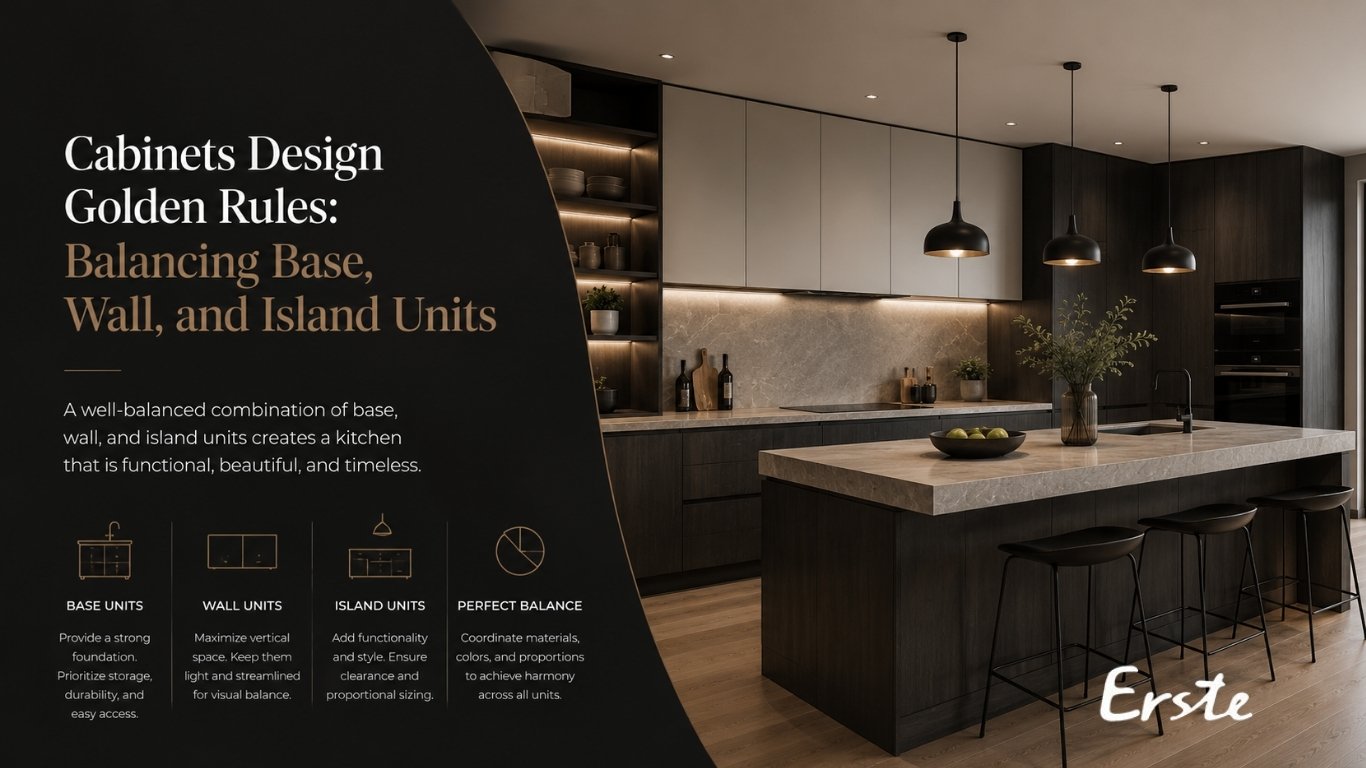
Cabinets design is the art and science of arranging storage units so they function harmoniously together. At its core, successful cabinets design comes down to balance—distributing visual weight, storage capacity, and functional zones across base cabinets, wall cabinets, and island units in a way that feels neither top-heavy nor bottom-light. Whether you are planning a full kitchen renovation or simply refreshing your storage layout, understanding the golden rules of cabinets design will help you avoid common pitfalls.
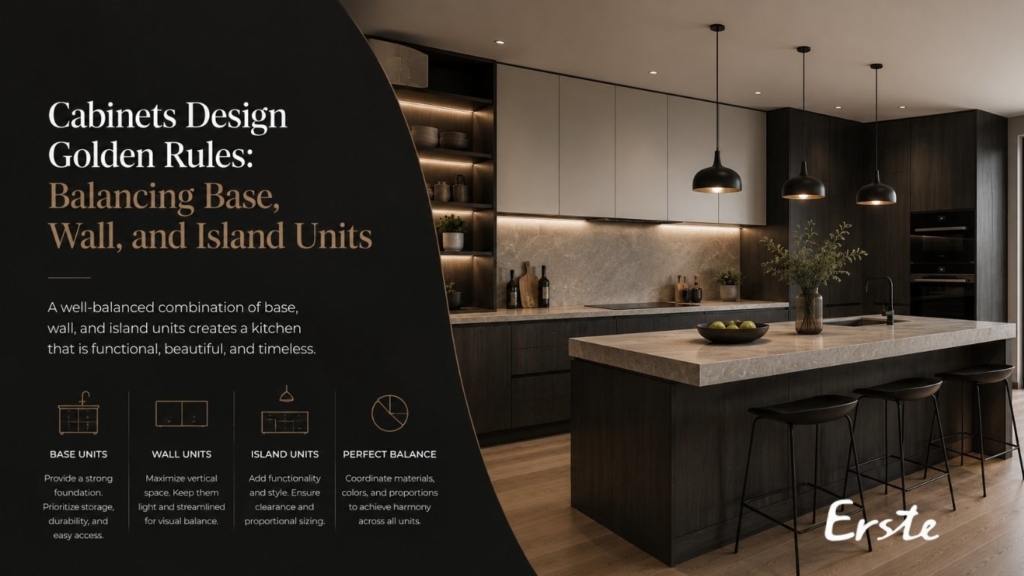
Cabinets Design Rule One: Base Cabinets Handle Heavy Storage and Primary Work Zones
Base cabinets form the foundation of any kitchen. They sit directly on the floor, supporting countertops and bearing the brunt of daily use. Good cabinets design recognises that base units should handle the heaviest items and most frequent tasks.
- Base cabinets directly under the cooktop should house pots, pans, and cooking utensils. This placement minimises movement during cooking—everything you need is right where you need it.
- Base cabinets under the sink require careful planning. Pull-out bins for waste and recycling, cleaning supply organisers, and tip-out trays for sponges make this awkward space highly functional. Quality cabinets design never treats the sink base as wasted space.
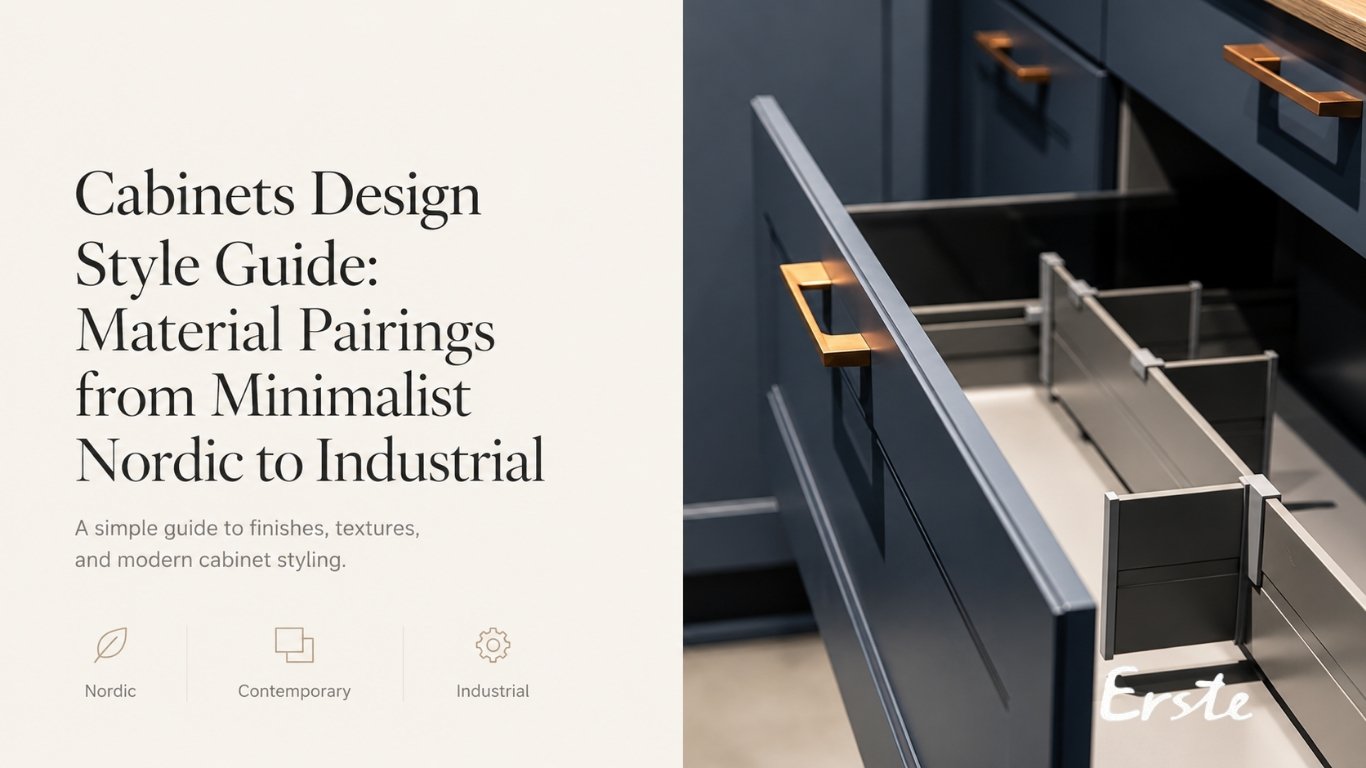
- Drawer-based base cabinets are superior to shelf-based units for most kitchen items. Drawers provide complete visibility and easy access to contents at the back. In tight kitchens, deep drawers with internal dividers outperform traditional shelf-and-door arrangements .
Standard base cabinet depth is 24 inches, with a standard height of 36 inches including the countertop. Good cabinets design ensures base units are deep enough to accommodate standard appliances but not so deep that accessing the back becomes difficult.
Cabinets Design Rule Two: Wall Cabinets Work Without Overwhelming the Space
Wall cabinets, also called upper cabinets, mount directly to the wall above base units. They are essential for storage but can make a kitchen feel cramped if overused. Balanced cabinets design treats wall units as supplements—not replacements—for base storage.
- Mount wall cabinets at the right height for comfortable access. The bottom of wall cabinets should sit approximately 18 inches above the countertop, giving you enough clearance for standard countertop appliances while keeping upper shelves reachable . Standard wall cabinet depth is 12 inches.
- Use glass-front or open wall cabinets to break up visual mass. A run of solid doors across all upper cabinets can feel heavy and oppressive. Alternating closed storage with display niches or open shelving creates rhythm and reduces visual density.
- Take wall cabinets to the ceiling for maximum storage and a built-in look. This is a classic cabinets design trick that eliminates the dusty, wasted gap above standard-height uppers. Use the top shelves for infrequently accessed items like seasonal serving platters or holiday bakeware.
In compact kitchens, consider using shallower wall cabinets of 300-320 mm depth to increase perceived floor space while maintaining storage capacity . Good cabinets design adapts to the room rather than forcing the room to adapt to standard dimensions.
Cabinets Design Rule Three: The Island Anchors Without Dominating
Island units are the most versatile element in modern cabinets design. They can serve as prep space, dining area, additional storage, or all three simultaneously. But islands can also ruin a kitchen if they are the wrong size or poorly positioned.
- Slim-profile islands paired with full-height perimeter cabinetry improve circulation while maximising vertical storage. In tight rooms, a 20-inch-deep island handles quick prep and breakfast seating without cramping the aisle.
- The island should be a workhorse, not a showpiece. Prioritise practical features: drawers for utensils, pull-outs for cutting boards, tray dividers for baking sheets. The best cabinets design treats the island as functional storage first and social hub second.
- Seating overhangs need careful planning. A 10-12 inch overhang provides adequate knee clearance for stools . The height of the island stool depends on the height of the island, with at least 10 inches between the top of the stool and the bottom of the countertop for comfortable seating .
- Aisle widths less than 36 inches create pinch points that make cooking miserable. Comfortable working aisles require 40-42 inches of clearance. Many designers recommend no less than 42 inches from the edge of one countertop to the other .
When adding an island to an existing kitchen, measure twice. Standard island depth using 24-inch base cabinets is typical, with island counter depth at least 36 inches overall .
Cabinets Design Rule Four: Distribute Visual Weight Evenly Across All Units
Beyond function, cabinets design is about visual harmony. A kitchen looks best when no single element overwhelms the others.
- Use colour to balance visual weight. Dark cabinets feel heavier than light cabinets. Placing dark base cabinets on the bottom and light wall cabinets on the top creates a stable, grounded look. Conversely, dark uppers with light bases can feel unstable.
- Vary cabinet heights and depths to create movement. Adding a tall pantry cabinet at one end of a base run, or using a shallower depth for some wall units, prevents the monotony of identical boxes marching across the wall.
- Limit door styles to one or two profiles to reduce visual noise. Too many different panel patterns competing for attention makes the kitchen feel chaotic. Cleaner designs with slimmer rails reduce visual density.
Good cabinets design does not announce itself. You notice a well-balanced kitchen without being able to pinpoint exactly why it looks right. That is the mark of professional design.
Cabinets Design Excellence from erste
At erste, cabinets design is at the heart of everything we do. Our portfolio showcases base, wall, and island units working together in perfect balance across hundreds of Hong Kong homes. See our cabinets design work: https://www.erste.com.hk/our-work/
Ready to explore cabinets design options for your kitchen renovation? Get in touch with unsere design specialists today: https://www.erste.com.hk/contact/