Cabinets design is about more than just organising storage—it is a defining element of your home’s character. The materials, finishes, and hardware you choose for your cabinets establish the visual language of the entire space. Among the most compelling and enduring styles in contemporary cabinets design are Minimalist Nordic and Industrial. At first glance, these two aesthetics appear to be opposites: Nordic design values light woods, soft textures, and airy simplicity, while Industrial design embraces raw steel, exposed concrete, and utilitarian edge. Yet when paired thoughtfully, these styles create a cabinets design that is both warm and structured, calm and characterful.
Understanding Minimalist Nordic Cabinets Design
Nordic cabinets design draws from the principles of Scandinavian minimalism: clean lines, uncluttered surfaces, and a deep respect for natural materials. The palette is restrained—soft whites, pale greys, muted beiges, and the warm tones of light oak or ash wood. Nordic cabinets design prioritises function without sacrificing beauty. Every element serves a purpose, and decorative excess is avoided. The result is a space that feels airy, calm, and almost weightless.
- Key materials in Nordic cabinets design include light‑stained oak, birch, ash, and beech. These woods bring warmth and a subtle grain texture without overwhelming the space.
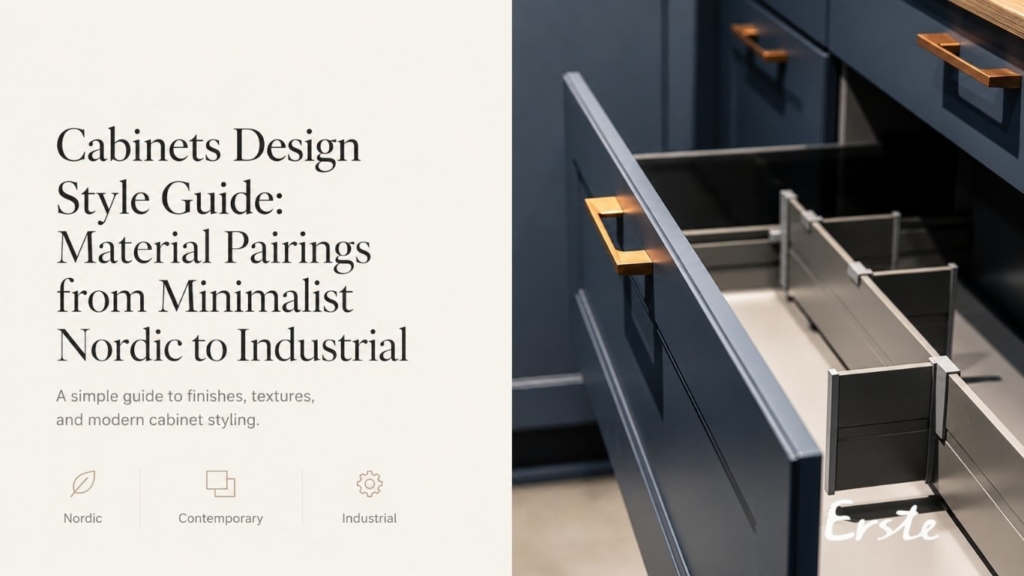
- Cabinet fronts are typically flat‑panel or shaker‑style, with minimal profile detailing. Handles are either discreet integrated pulls or small, cylindrical knobs in brushed metal or light wood.
- The Nordic approach to cabinets design emphasises natural light. Reflective surfaces, glass cabinet doors, and open shelving prevent the cabinetry from feeling heavy or oppressive.
Understanding Industrial Cabinets Design
Industrial cabinets design takes its cues from converted factories and warehouses. It celebrates raw, unfinished materials and exposed structural elements. The colour palette is darker—charcoal, matte black, rust, and concrete grey—with accents of deep green or warm brown from leather or aged wood. Industrial cabinets design often incorporates elements that would be hidden in other styles, such as exposed metal brackets, visible hardware, and open pipe frameworks.
- Dominant materials include steel (often in matte black or galvanised finishes), reclaimed wood, concrete, and brick. These materials are used in their honest, unadorned state.
- Cabinet fronts in Industrial cabinets design may feature metal mesh inserts, visible rivets, or flush‑mount handles in black iron. The overall aesthetic is bold, utilitarian, and unapologetically robust.
- Unlike Nordic design, Industrial cabinets design does not shy away from visual weight. Dark finishes and dense materials are embraced for their grounding effect.
Combining Nordic and Industrial in Cabinets Design
The most successful hybrid cabinets design balances the raw edge of Industrial with the warmth of Nordic minimalism. The goal is not to dilute either style but to let each complement the other. Use Nordic elements as the soft foundation and Industrial details as intentional, restrained accents.
Material Pairings That Work
Effective cabinets design in this hybrid style uses material contrast thoughtfully.
- Pair light oak or ash cabinetry with matte black steel handles and hardware. The lightness of the wood offsets the industrial weight of the metal, preventing the space from feeling too dark or oppressive.
- Use concrete or cement‑finished countertops with Nordic‑style white or pale grey cabinets. The cool, raw texture of concrete provides a striking contrast to the smooth, warm wood.
- Introduce open shelving with black steel brackets and light wood planks. This combination embodies the fusion perfectly: the steel provides industrial structure, while the wood brings Nordic warmth.
- For island units in your cabinets design, consider a darker finish—charcoal or deep grey—while keeping perimeter cabinets light. This anchors the space without overwhelming it.
Colour Palette for Hybrid Cabinets Design
The colour scheme should prioritise Nordic neutrals as the base, with Industrial accents used sparingly for contrast.
- Base colours: Warm whites, pale grey, taupe, and sand beige.
- Accent colours: Matte black, charcoal, rust (used minimally), and olive green.
- Avoid painting entire walls or large cabinet runs in dark industrial shades. Instead, use dark accents on handles, lighting fixtures, leg frames, and smaller cabinet sections. This approach preserves the airy quality of Nordic cabinets design while introducing industrial character.
Hardware Selection for Hybrid Cabinets Design
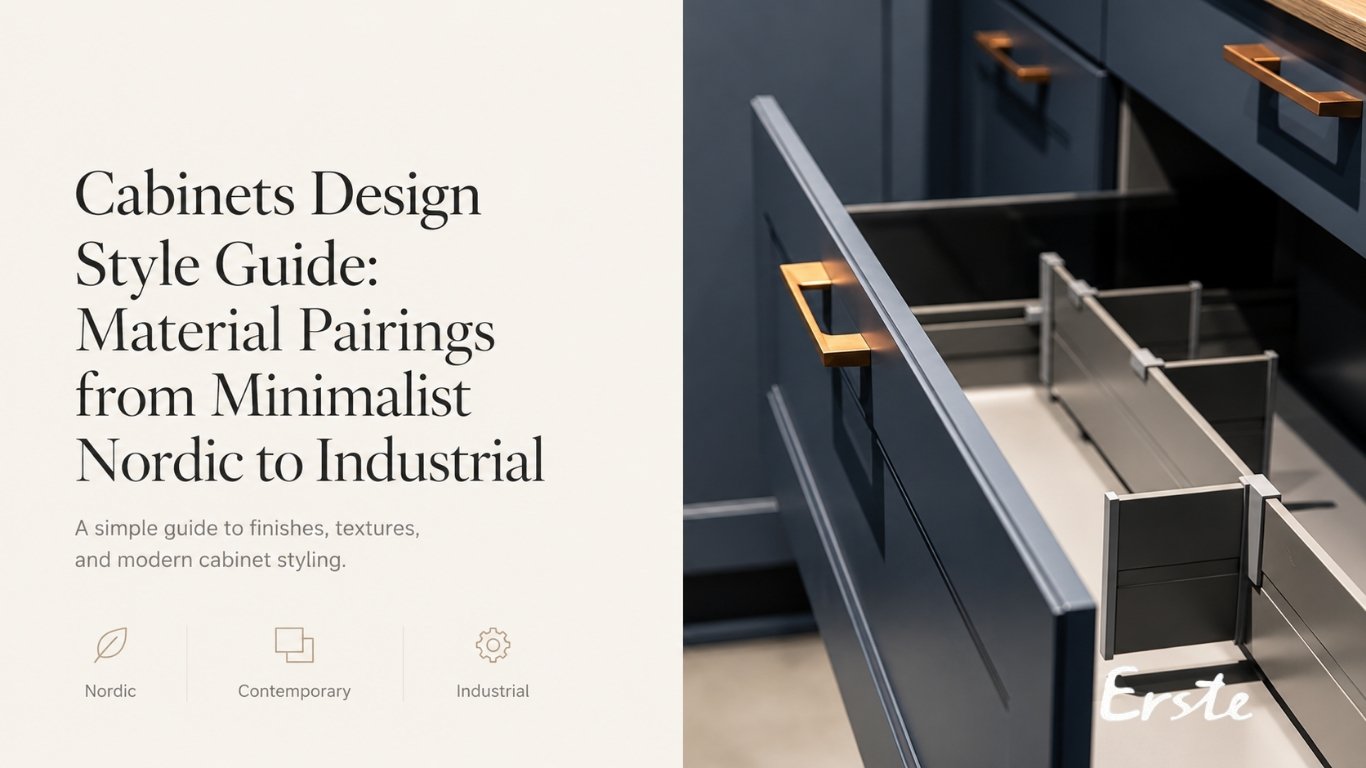
Hardware is where the two styles can be merged most directly in your cabinets design. Industrial elements often feature matte black pulls, exposed hinges, and chunky handles. Nordic design favours discreet, almost invisible hardware. A hybrid approach selects industrial‑style hardware but uses it sparingly—for example, matte black bar pulls on a bank of light oak drawers.
- For drawer fronts and cabinet doors, opt for hardware with clean lines but robust construction. A black metal pull with a simple rectangular profile reads as both industrial and minimalist.
- Use exposed hinges on a few select cabinets as an accent. This industrial detail becomes a design feature rather than something to hide.
- Consider integrating handleless push‑to‑open mechanisms on some cabinets while using visible industrial pulls on others. The interplay between hidden and exposed hardware adds depth to your cabinets design.
Lighting to Enhance Hybrid Cabinets Design
Proper lighting brings your cabinets design to life and helps balance the two aesthetics. Industrial pendant lights with metal frames or exposed bulbs provide statement illumination. Nordic‑style table lamps in ceramic or light wood offer softer task lighting.
- Use warm white bulbs (2700–3000K) to soften the industrial edge. Cool lighting makes raw materials appear even colder, while warm light brings out the warmth in wood and soft textiles.
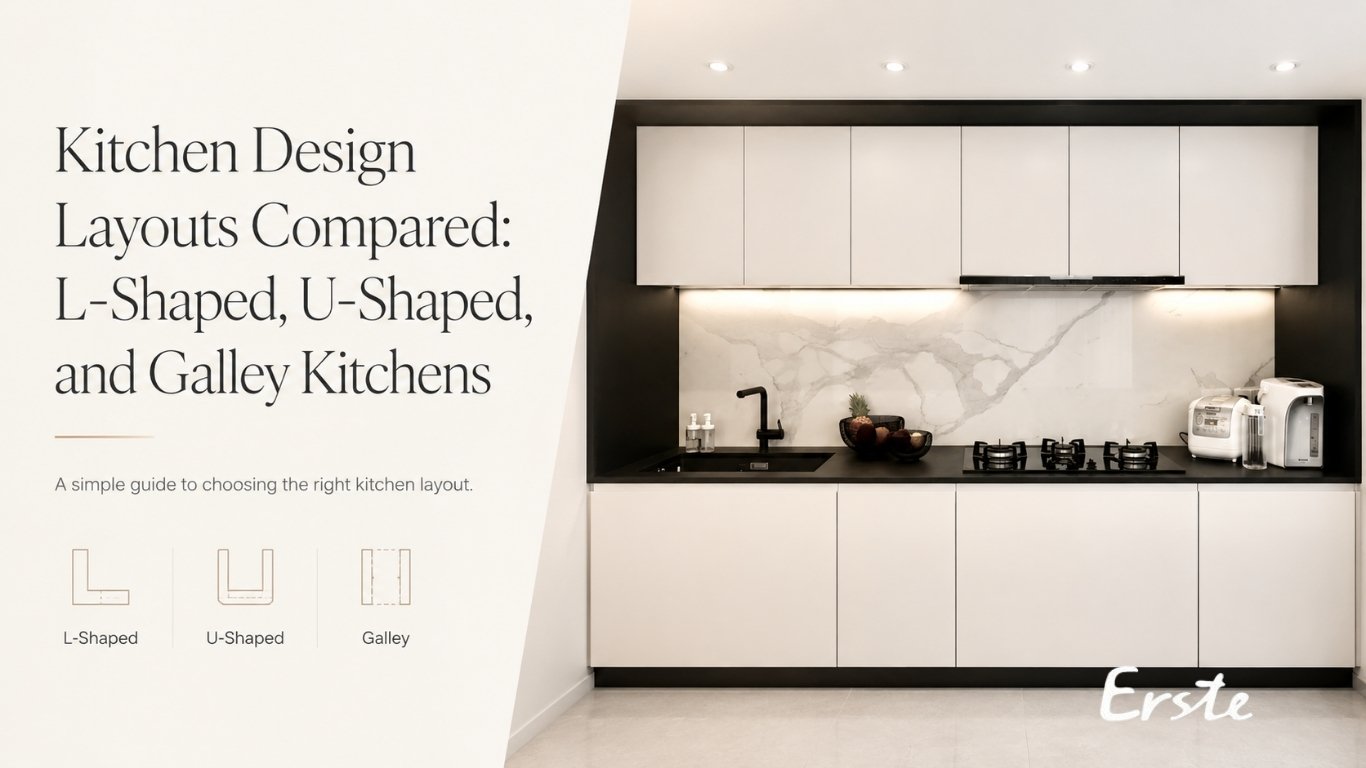
- Under‑cabinet LED strips soften the shadows cast by upper cabinets. This practical addition aligns with Nordic functionality while complementing the industrial aesthetic.
- Black metal sconces or pendant lights hung over a kitchen island or dining area serve as focal points that unify the two styles.
Avoiding Common Pitfalls in Hybrid Cabinets Design
When blending Nordic and Industrial in your cabinets design, avoid these common mistakes.
- Do not overload the space with industrial elements. A kitchen with black steel everywhere, exposed pipes, and concrete on every surface feels like a warehouse, not a home. Industrial should be the accent, not the foundation.
- Do not make the space too cold. Nordic design introduces warmth through wood and textiles. Without these softening elements, a hybrid cabinets design can feel uninviting.
- Do not use too many different materials. Stick to two or three primary materials (light wood, black metal, and one natural texture like concrete or brick) to maintain cohesion.
Cabinets design that successfully merges Minimalist Nordic and Industrial styles creates a space that feels both structured and soft, textured and clean. The contrast is intentional but not jarring. The result is a kitchen that is as visually engaging as it is functional.
erste specialises in custom cabinets design across a wide range of styles. View our portfolio for real‑world examples: https://www.erste.com.hk/our-work/
Ready to explore cabinets design options for your home? Contact unsere team: https://www.erste.com.hk/contact/