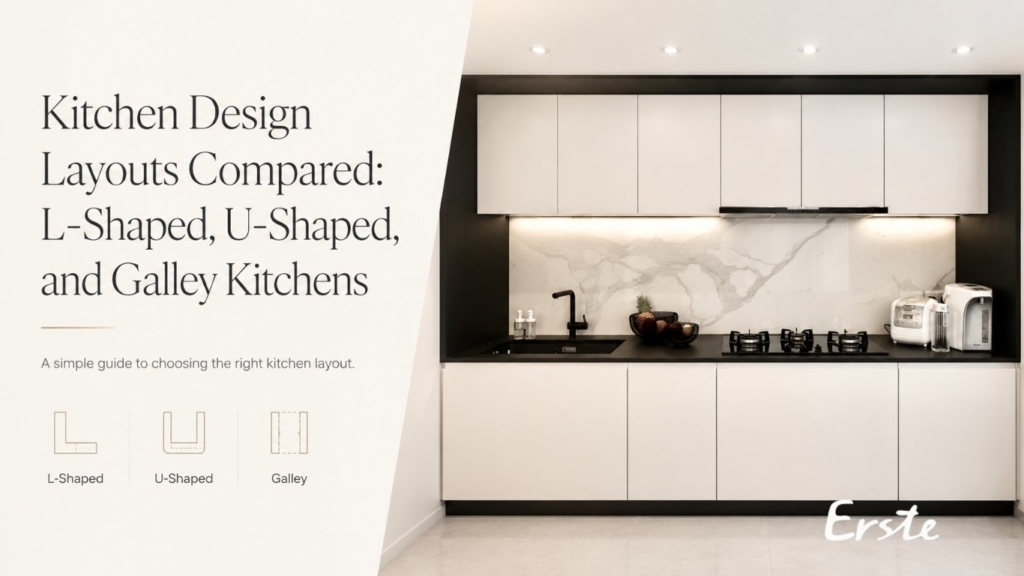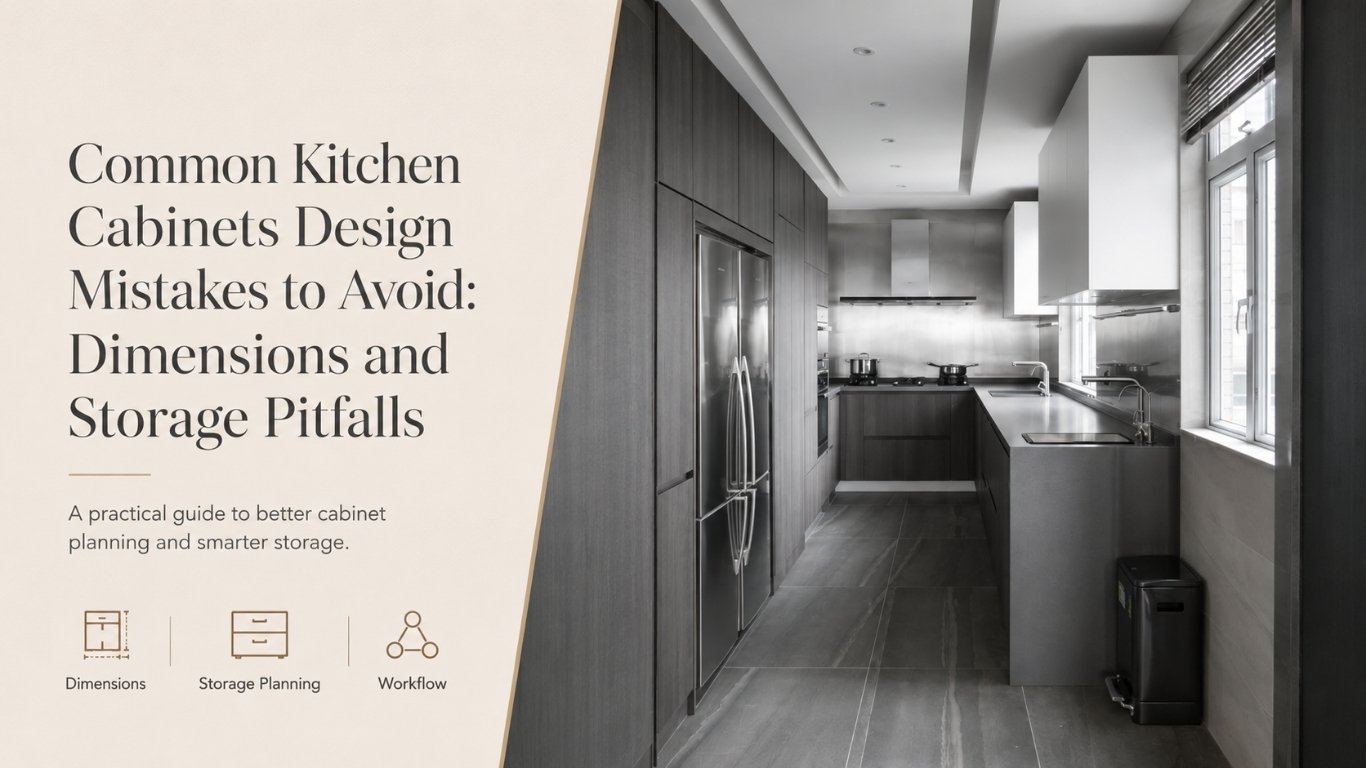
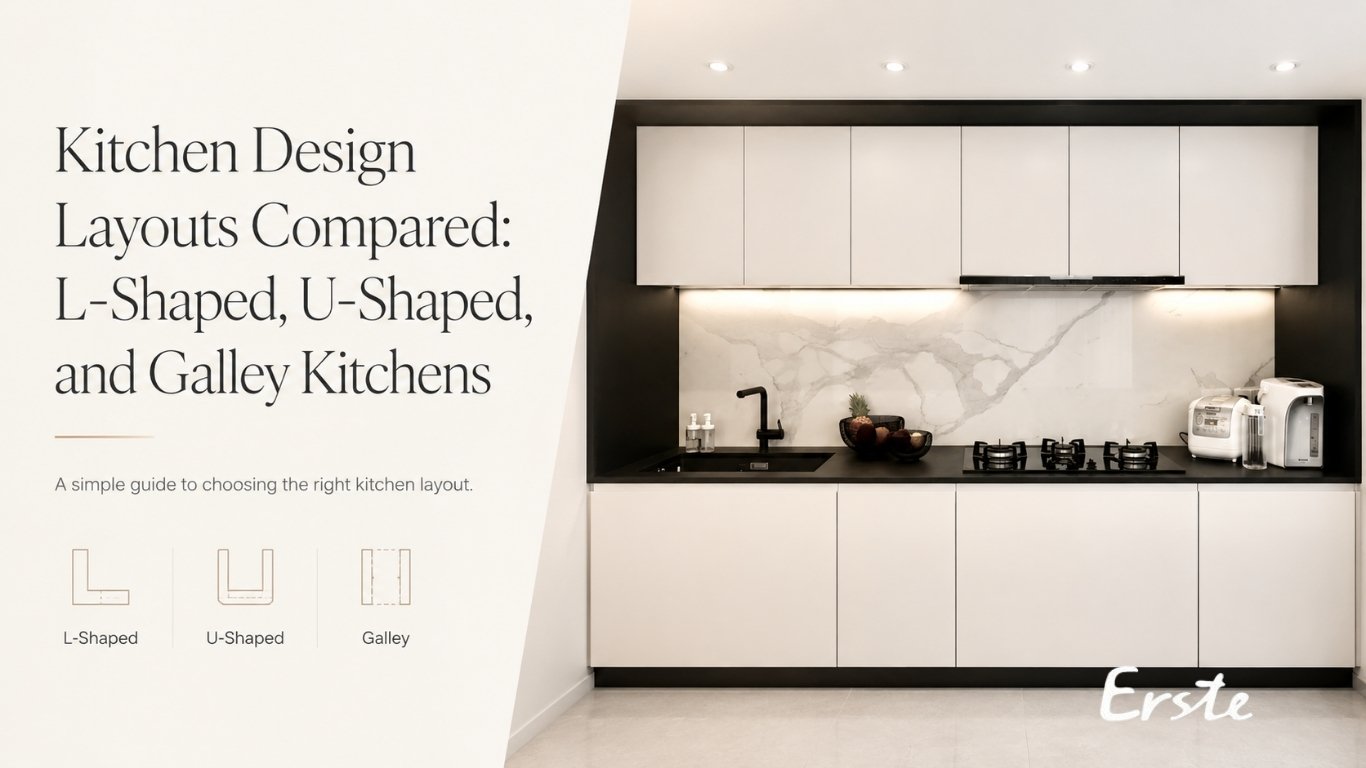
The choice of kitchen layout is arguably the most consequential decision you will make in any kitchen renovation. Your kitchen design layout determines how efficiently you move between tasks, how comfortably multiple family members or guests can share the space, and how effectively every inch of floor area is utilised. Among the many available configurations, three layouts dominate residential kitchen design: L‑shaped, U‑shaped, and galley kitchens. Each offers distinct advantages and trade‑offs, and the right choice depends on your space constraints, cooking habits, and lifestyle needs.
L‑Shaped Kitchen Design: Open, Flexible, and Traffic‑Friendly
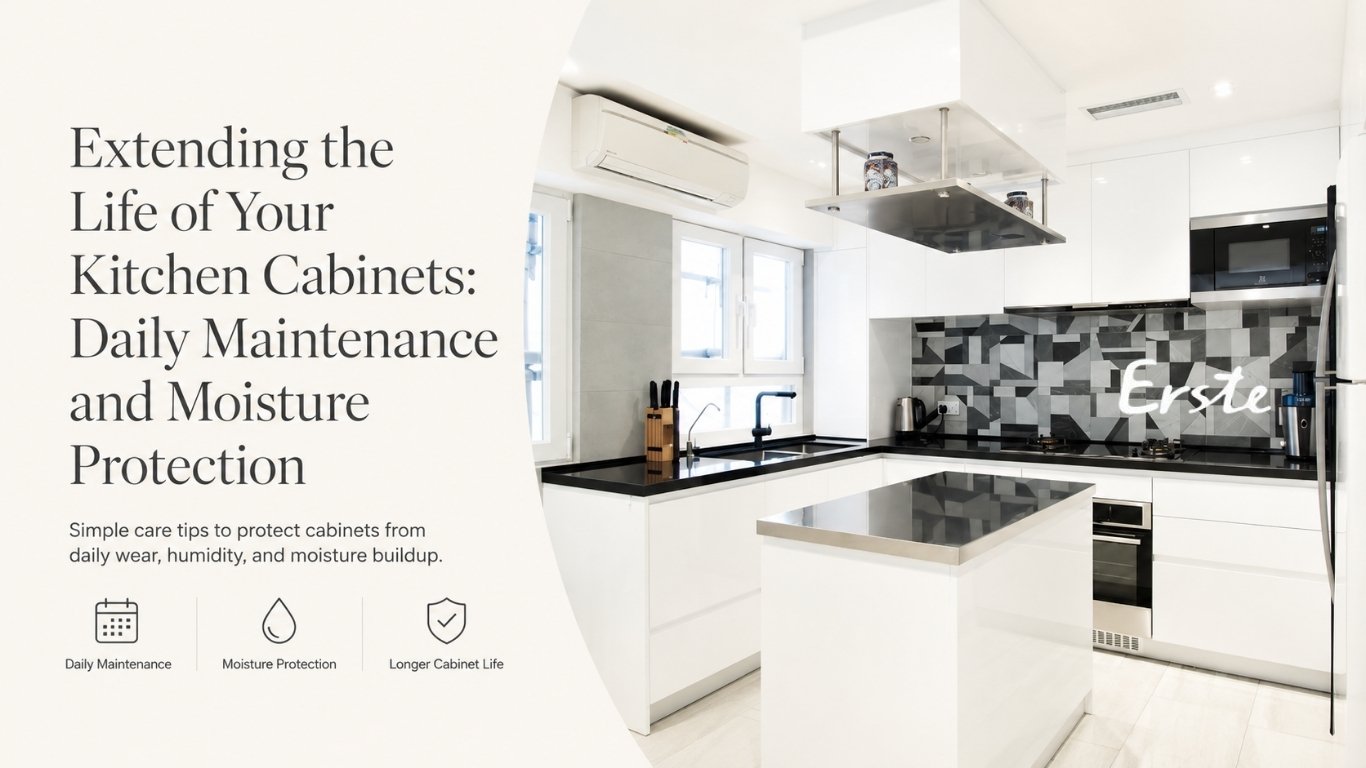
Kitchen design using an L‑shaped layout places cabinets and appliances along two adjacent walls, forming a natural L. This configuration is widely considered one of the most forgiving and versatile layouts. It works well in both small apartments and large open‑plan homes, and it leaves the central floor area free for movement, a dining table, or an island.
- One of the greatest strengths of L‑shaped kitchen design is its ability to handle traffic. Because the work zones are distributed along two walls, the centre of the room remains unobstructed. If your kitchen functions as a pass‑through space linking other rooms, the L‑shape typically handles pedestrian flow better than galley or U‑shaped layouts.
- The L‑shaped layout also excels in open‑plan living. It connects seamlessly with adjacent dining or living areas, creating a sociable environment where cooks are not isolated from family and guests.
- The trade‑off is that corner storage can be challenging. Without careful planning, the corner formed by the two cabinet runs becomes dead space. However, using pull‑out corner organisers or lazy Susans transforms this potential weakness into a strength.
When L‑Shaped Kitchen Design Works Best
L‑shaped kitchen design is particularly suitable when you want an open, airy feel and when the kitchen connects to other living spaces. It is the layout most frequently recommended for homes where multiple people cook together, as the open floor area allows two or more cooks to move without constantly bumping into each other.
- Best for: Open‑plan homes, apartments with modest square footage, and homeowners who plan to add an island or breakfast table.
- Storage potential: Moderate compared to U‑shape, but enhanced by corner storage solutions.
- Workflow: Balanced, especially when the sink, stove, and refrigerator are placed on adjacent walls to maintain an efficient work triangle.
U‑Shaped Kitchen Design: Maximum Storage and Countertop Capacity
U‑shaped kitchen design uses three connected walls of cabinetry and appliances, forming a U. This layout offers the most generous storage and countertop space among all configurations. Serious home cooks and large families often favour the U‑shape because it provides abundant preparation surfaces and keeps everything within easy reach.
- The primary advantage of U‑shaped kitchen design is its storage density. With three walls of cabinets, you gain significantly more linear feet of storage than in an L‑shaped or galley kitchen of the same floor area. This makes the U‑shape ideal for households that need to store extensive cookware, ingredients, and appliances.
- The U‑shape also creates an exceptionally efficient work triangle. The sink, stove, and refrigerator can be placed on three separate walls, keeping distances short and movements minimal. This closed configuration was originally designed for a single cook, but with adequate aisle width, multiple cooks can work together comfortably.
- However, U‑shaped kitchen design has limitations. It can feel enclosed or boxed‑in if the room is small or if aisle widths fall below recommended minima. The layout works best in medium‑to‑large kitchens where there is enough space to move freely.
When U‑Shaped Kitchen Design Works Best
U‑shaped kitchen design excels in dedicated kitchen rooms that are not required to function as walkways to other parts of the home. It is often the preferred layout for homeowners who cook frequently and need maximum prep and storage capacity.
- Best for: Large families, enthusiastic home cooks, and kitchens where space is dedicated solely to cooking.
- Storage potential: Highest among all layouts.
- Workflow: Extremely efficient, but requires careful aisle planning (minimum 36‑42 inches) to avoid feeling cramped.
Galley Kitchen Design: Compact Efficiency for Narrow Spaces
Galley kitchen design features two parallel runs of cabinets and appliances with a central walkway in between. Named after ship galleys, where space is at an absolute premium, this layout is the champion of efficiency in narrow or enclosed spaces. When designed well, a galley kitchen minimises wasted steps and places everything within arm’s reach.
- The galley layout is the best performer in tight footprints. By using two opposing walls, every inch of perimeter space is utilised for storage. The compact work triangle—often a straight line along one wall or a short shuffle between the two sides—delivers incredibly fast task completion for a single cook.
- Galley kitchen design is also typically more budget‑friendly than L‑shaped or U‑shaped layouts because the straight runs minimise complex corner joinery.
- The main drawback is that galley kitchens can feel anti‑social. They are less suited to open‑plan living and do not naturally accommodate guests lingering near the cook. Two people cooking simultaneously can feel cramped unless the aisle width is generous (at least 42 inches). Also, the corridor layout can become a traffic bottleneck if the kitchen serves as a pass‑through to other rooms.
When Galley Kitchen Design Works Best
Galley kitchen design is the go‑to choice for apartments, small flats, and any narrow space where efficient use of limited width is the top priority.
- Best for: Small apartments, secondary kitchens, and solo cooks who prioritise speed over social space.
- Storage potential: Good, but limited by the room’s length.
- Workflow: Highly efficient for a single cook; less comfortable for multiple users.
Practical Advice: Choosing the Right Kitchen Design Layout
Comparing L‑shaped, U‑shaped, and galley kitchen design layouts is about matching the geometry to your specific circumstances. Before committing to a layout, consider these practical factors:
- Room shape and traffic patterns: If the kitchen must also function as a corridor, avoid U‑shaped and galley layouts. An L‑shaped kitchen design will serve you better.
- Cooking frequency: Frequent, elaborate cooking favours the U‑shape. Quick, everyday meals are well served by a galley.
- Number of cooks: Multiple cooks sharing the space will appreciate the openness of an L‑shape with an island or a generous U‑shape with wide aisles.
- Storage needs: Assess your current cabinets. If they are overflowing, prioritise a U‑shape. If you have modest storage needs, the L‑shape or galley may suffice.
No single layout is universally superior. The best kitchen design is one that aligns with your daily cooking habits, respects your spatial constraints, and feels comfortable to you and your family. Exploring actual case studies can help you visualise what works. View unsere completed projects: https://www.erste.com.hk/our-work/
Ready to discuss which kitchen design layout suits your home? Contact unsere team for a consultation: https://www.erste.com.hk/contact/